Potting balls off the cushion
A ball tight against a cushion is one of the highest-frequency hard shots in pool. It comes up several times a frame and almost nobody practises it.
It is harder for a specific, fixable reason: the margin for error is genuinely smaller, and most players make it smaller still by changing their technique without meaning to.
What the cards look like
Both are from the On the Cushion pack, and both are deliberately sparse — three balls, nothing else to think about. That is what you want when practising a specific shot type: no clusters, no obstacles, just the rail problem repeated.
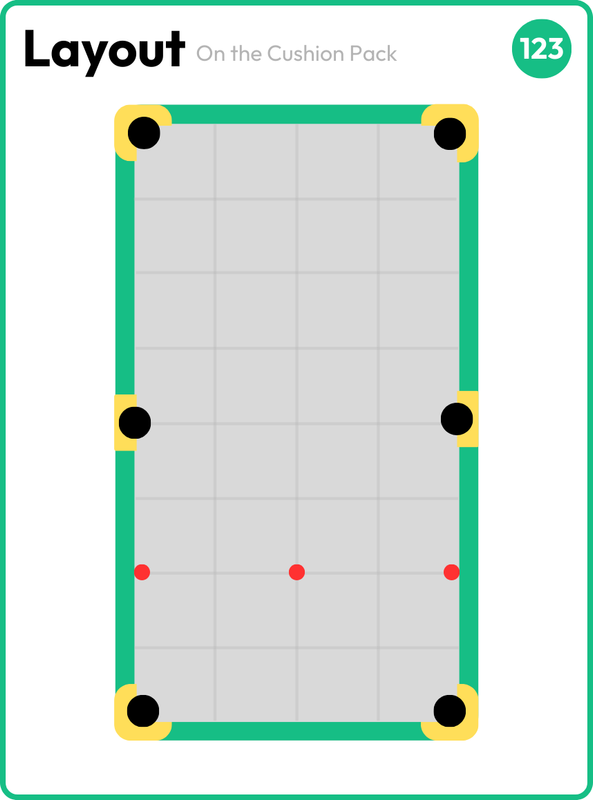
Two of three sitting on the side rails.
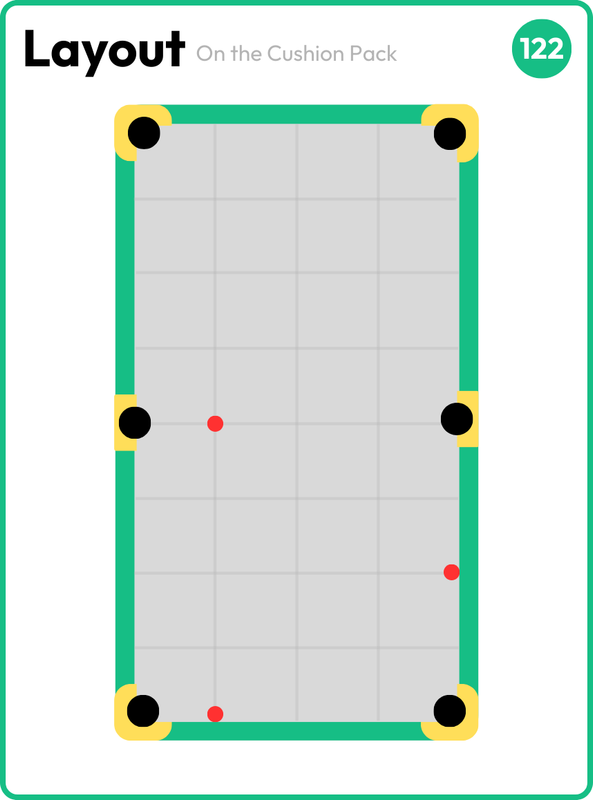
Rail balls at two different cushions.
Why a rail ball is harder
On an open ball, you can miss the contact point slightly on either side and the ball still finds the pocket. On a ball frozen to the cushion, one of those directions is gone — hit it fractionally on the rail side and the ball simply runs along the cushion.
That asymmetry is the entire difficulty. There is no trick that removes it; there is only knowing it exists and aiming accordingly.
The contact
- Aim to strike the object ball and the cushion at almost the same instant on a genuinely frozen ball. Contacting the rail a fraction first is usually better than contacting the ball too full.
- Keep the cue as level as the rail allows. A raised butt applies downward force and makes the cue ball hop, which ruins the contact.
- Avoid side spin unless you have a specific reason. Side plus a cushion is a compounding error.
- Play them a touch firmer than feels natural — a slow rail ball has time to drift along the cushion.
The bridge is the real problem
When the cue ball is on the rail, you cannot make a normal bridge. Most players improvise, and the improvisation is where the shot is lost.
Use a rail bridge deliberately: hand flat on the cushion, cue running along the groove between thumb and forefinger or resting on the rail itself, shortened bridge length. It feels cramped and it is meant to.
Practise this specifically, because a shortened stroke from an unfamiliar bridge is a different physical skill from your normal one. See grip, stance and bridge.
How to practise them
Set three balls on cushions and clear them, ten times, recording pass and fail. Then do the same with the cue ball starting on a rail as well, which doubles the difficulty and is the situation you will actually face.
Expect a much lower success rate than open-table potting. That gap is the honest measure of how much this shot has been costing you.
Common questions
- How do you pot a ball frozen to the cushion?
- Strike the object ball and the cushion at nearly the same moment, keep the cue level, avoid side spin and use slightly more pace than feels natural. The margin is one-sided, so err away from the rail.
- How do you bridge when the cue ball is on the rail?
- Lay the bridge hand flat on the cushion and shorten the bridge, keeping the cue as level as possible. Raising the butt to clear the rail causes the cue ball to hop and is the most common fault.
Stop choosing your own drills
CueCards deals you a randomised drill at your level, tracks whether you made it, and moves your skill rating accordingly. Free to start, no ads.
Deal a drill