Five easy pool drills to start with, card by card
Every drill below is a real card from the deck, at the easiest end of the difficulty range. Set the balls up as the card shows and play it.
A CueCards drill is normally a combination — a Layout card for where the balls go, a Cue Ball card for where the white starts, sometimes a Pocket card restricting which pockets count. The cards below show exactly that.
1. The box — four balls, four corners
The symmetry is the point. Every ball has a clear line to at least two pockets, so nothing here is a hard pot — which means the drill is really testing whether you choose a sensible order.
Play it once taking the balls in whatever order occurs to you, then play it again having decided the full order before your first shot. The second attempt is almost always cleaner, and that gap is the lesson.
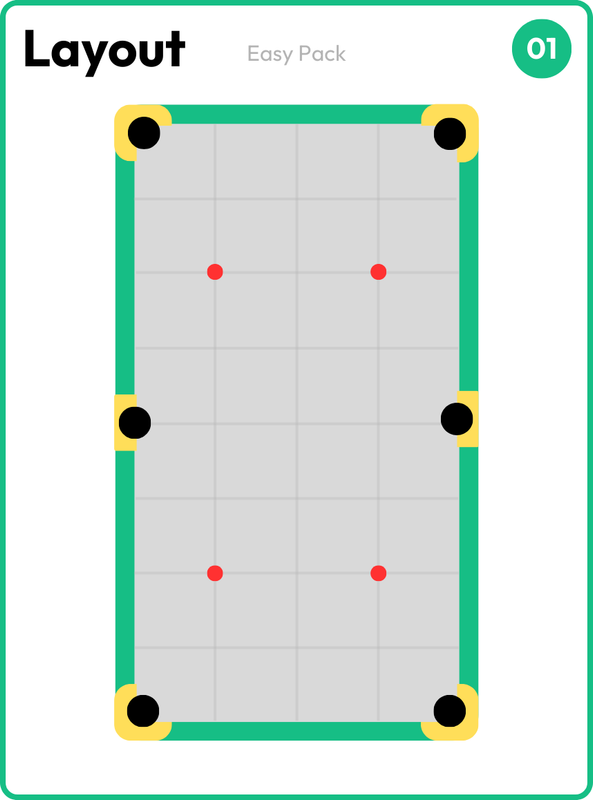
Four reds in two wide pairs, nothing near a cushion.
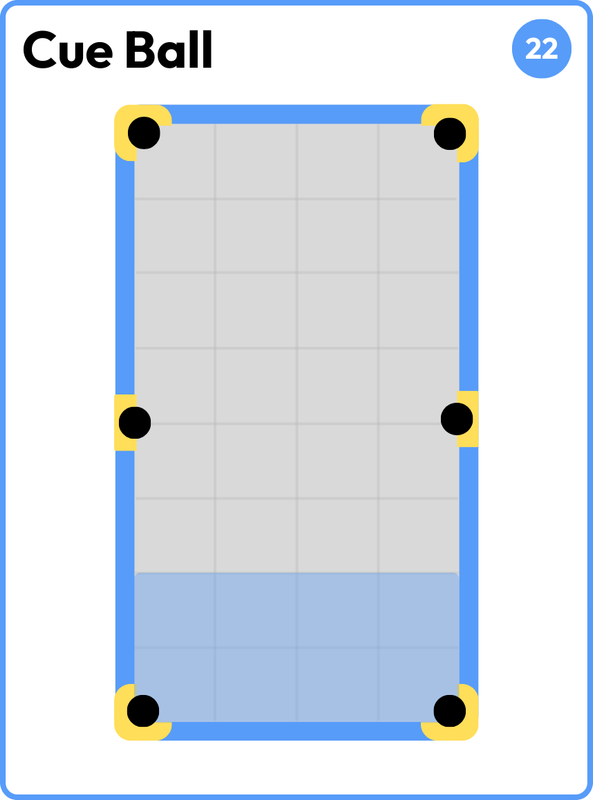
Start the white anywhere in the shaded band.
2. Open spread — the same skill, less symmetry
Same ball count as the first drill, but without the tidy pairing there is no obvious route. You have to actually look at the table and build one.
This is where leaving yourself an angle starts to matter. Land dead straight on a ball that is a long way from the next one and you will have no way to move the white sideways.
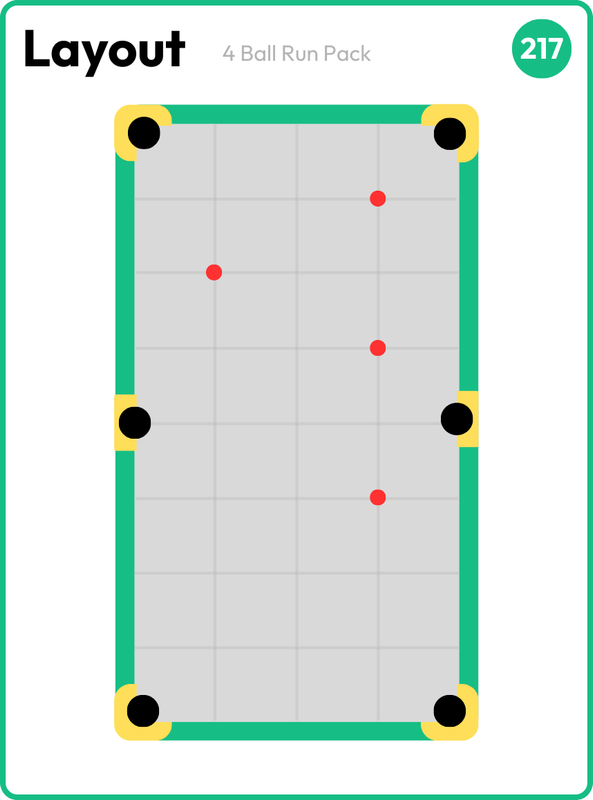
Four reds spread down the table, all off the cushions.
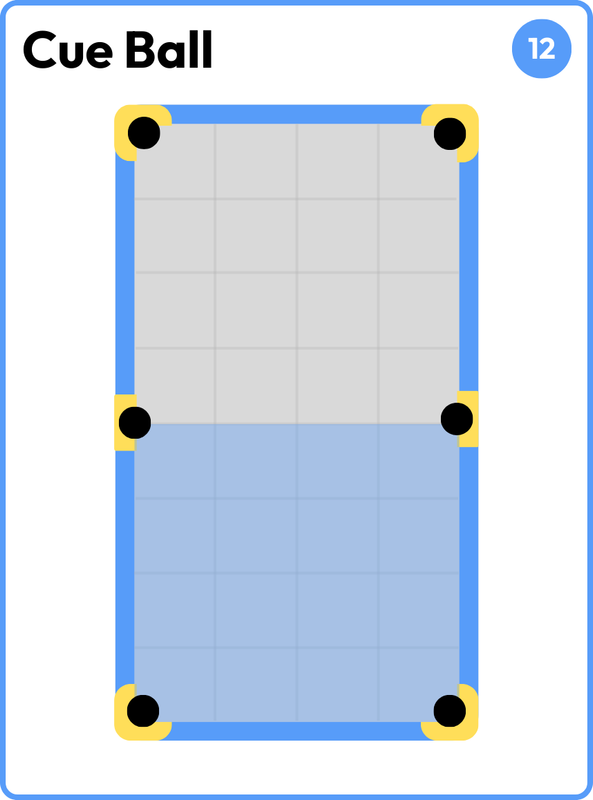
The whole bottom half is available.
3. Two reds and the black — finishing under pressure
Only three balls, and every one of them has a straightforward pot. What makes this drill useful is that it ends on the black, so there is a defined last shot you either make or do not.
Play the two reds thinking only about where the white finishes for the black. Most players discover they have been potting reds with no plan and then finding themselves awkward on the finish.
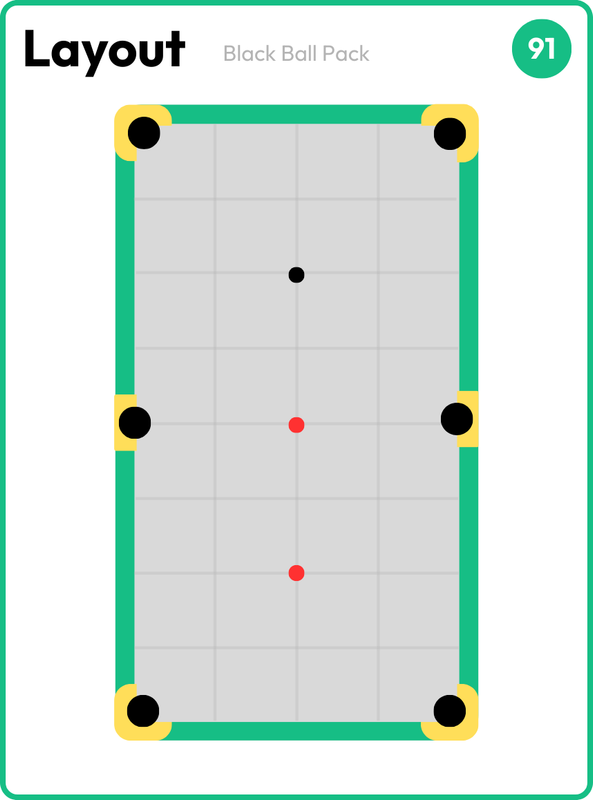
Two reds and the black, all on the centre line.
4. Five balls with a pocket restriction
The layout on its own is gentle. The Pocket card is what turns it into a drill: with both bottom corners dead, balls in the lower half now have to travel to a middle pocket or up the table.
Restricting pockets is the cheapest way to make an easy layout demanding, because it removes the escape route of just potting whatever is nearest. Grey pockets on the card are closed; black-and-yellow ones are live.
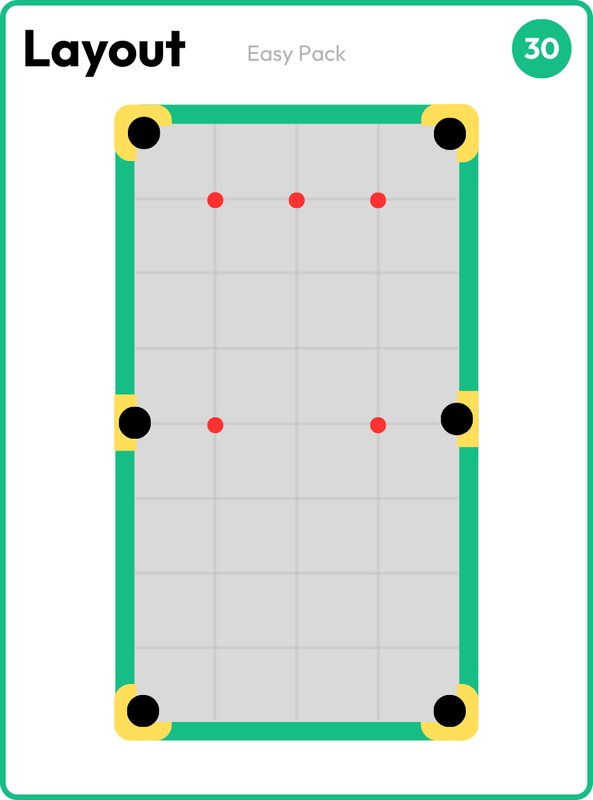
Three across the top, two on the middle-pocket line.
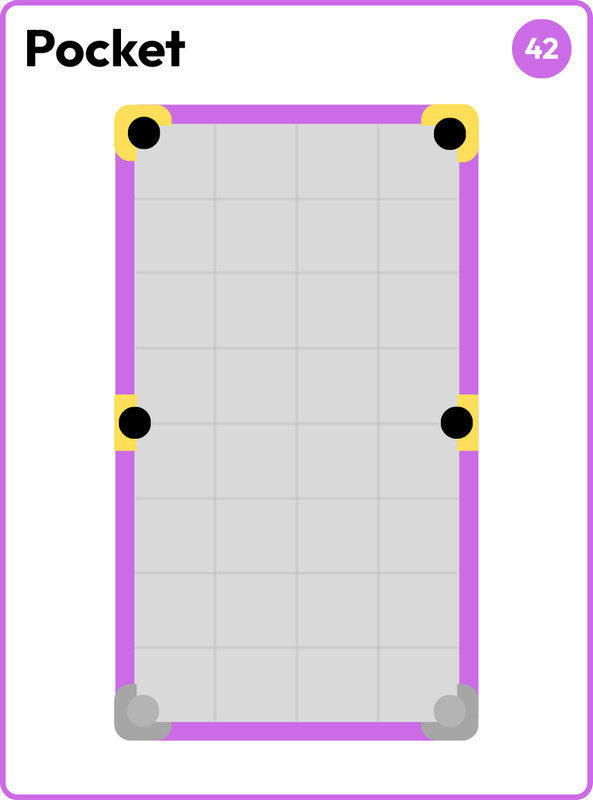
Only the top corners and both middles count.
5. Five balls, free cue ball
The easiest cue ball card in the deck, paired with a five-ball spread. Nothing is near a cushion and nothing is touching, so every pot is available from somewhere.
Being allowed to start anywhere sounds like a gift and is actually the hardest part: you now have to choose a starting position that makes the whole run work, not just the first pot.
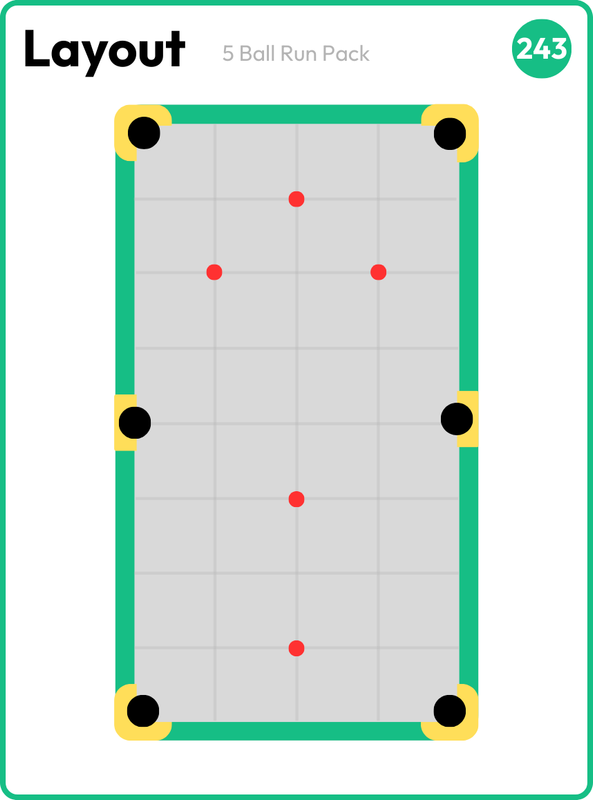
A loose triangle up top, two more in the middle.
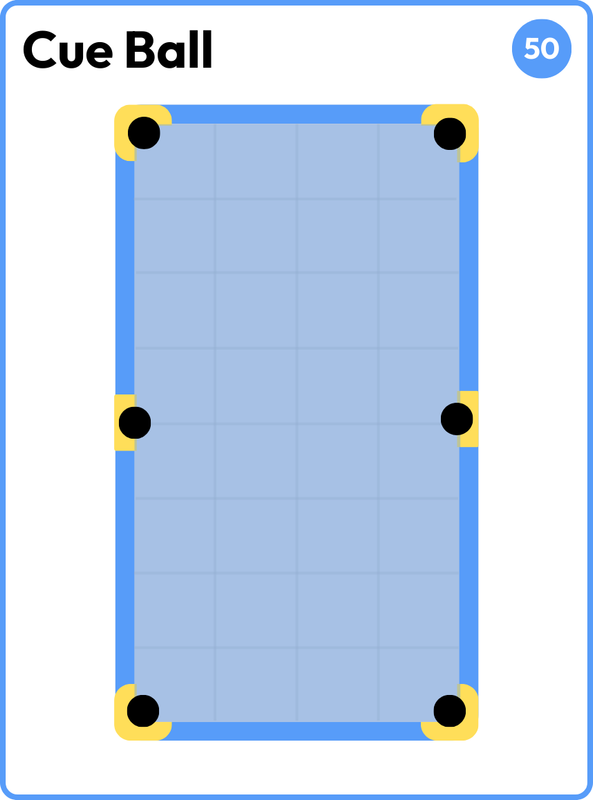
Whole bed shaded — start wherever you like.
What to do with the results
Write down pass or fail for each, and nothing else. Five drills, five marks. Do it again next week with the same five and you have a genuine before-and-after rather than an impression.
Once you are passing most of them, stop making these harder by hand — that is what the skill rating is for. It deals you drills at roughly a coin flip, which is the band where practice actually moves your game.
Common questions
- Do I need the exact ball positions from the card?
- Close is fine. The grid on the card is a guide, not a survey — a ball a few inches off will not change what the drill is testing. What matters is that you set it up the same way each time you repeat it.
- What if I do not have enough reds?
- Use any balls of the same group. The colours on the card distinguish balls you must pot from obstacle balls you must avoid, not any particular set.
- Can I practise these on a 7ft pub table?
- Yes. The layouts scale — the angles tighten a little but every drill still works. Just record which table you used, because your pass rates will not transfer between sizes.
Stop choosing your own drills
CueCards deals you a randomised drill at your level, tracks whether you made it, and moves your skill rating accordingly. Free to start, no ads.
Deal a drill