The five CueCards decks explained
A CueCards drill is not one card, it is a combination. Each deck controls a different variable, and the drill you get is whatever falls out when they are dealt together. In the app the hand is drawn as one drill card: the table with the balls placed, the cue-ball zone shaded, the rule written under it and any closed pockets crossed off, with the cards it came from as badges along the top.
That structure is deliberate: it produces far more distinct drills than a fixed list could, and it means you cannot quietly steer yourself toward the shots you like.
Layout — where the balls go
The Layout card sets the object ball positions on the table. It is the backbone of the drill and the only deck present in every single one.
Layouts range from a handful of open balls to congested arrangements with clusters and balls tight on cushions.
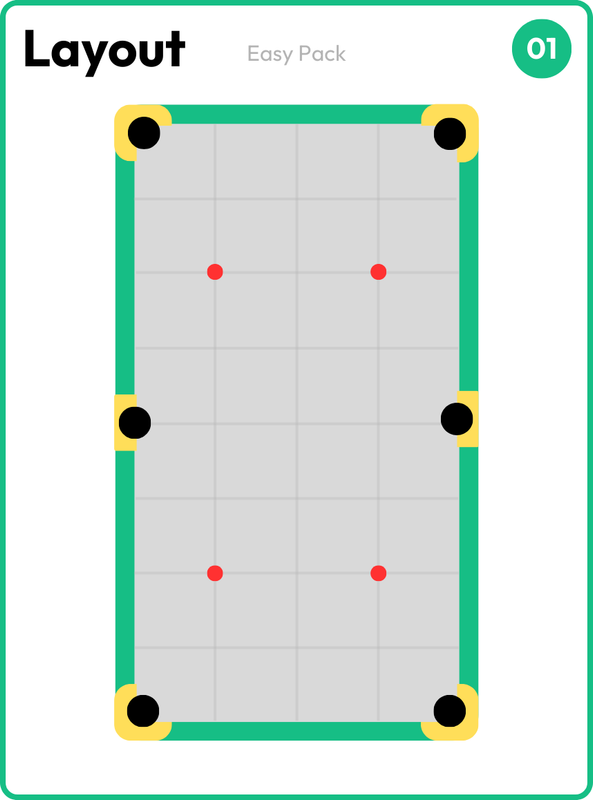
Red dots are the balls you must pot.
Cue Ball — where you start
The Cue Ball card places the white. This matters more than new players expect: the same layout played from the baulk line and from behind the black are effectively two different drills, with different angles and a different order of play.
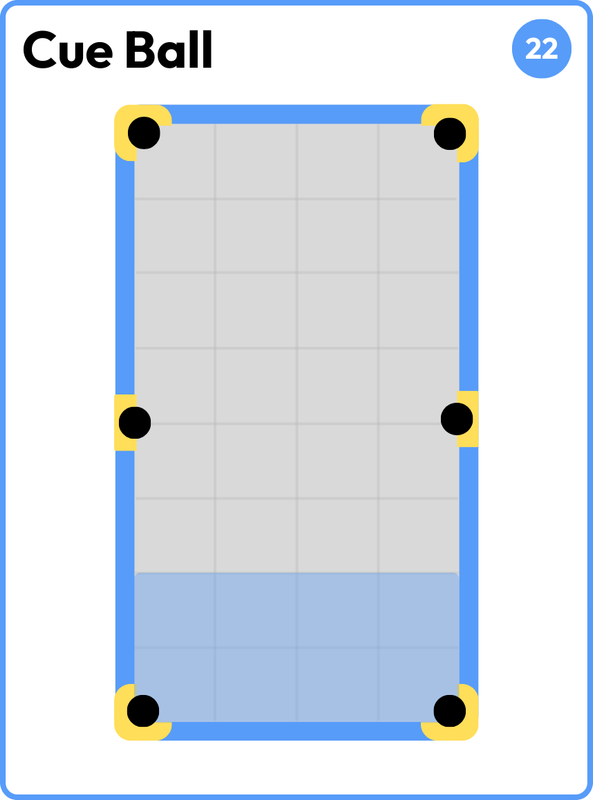
Start the white anywhere in the shaded zone.
Rule — the constraint
The Rule card adds a condition: pot in a set order, only use one cushion, no side spin, and so on. Rules are what stop a layout becoming routine once you have seen it a few times.
They are also where most of the difficulty range lives — the same layout with a demanding rule can be several hundred rating points harder.
Pocket — the target
The Pocket card nominates which pockets are legal. Restricting targets forces position play that the open table would let you avoid, and it is filtered by the ball count of the layout so the combination always makes sense.
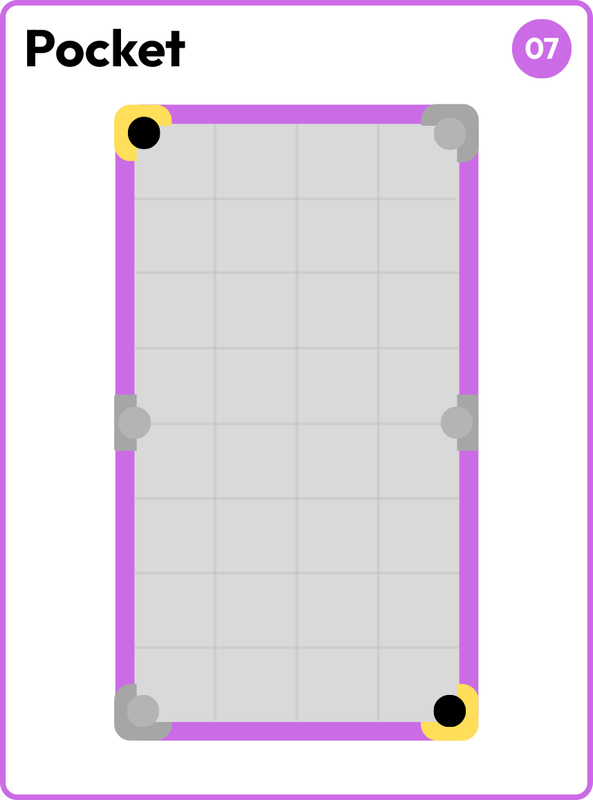
Grey pockets are dead; only the live ones count.
Safety — the defensive deck
Safety and escape cards ask for a defensive outcome rather than a pot: leave your opponent snookered, or escape from a specified snooker. They are the part of the game most players never practise, which is exactly why they are in the deck. See how to practise safety play and how to escape a snooker.
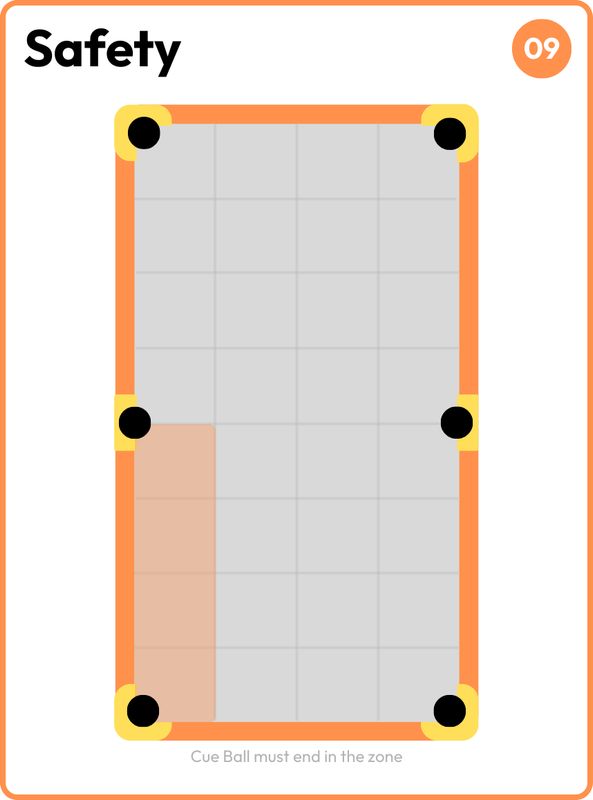
The cue ball must finish inside the zone.
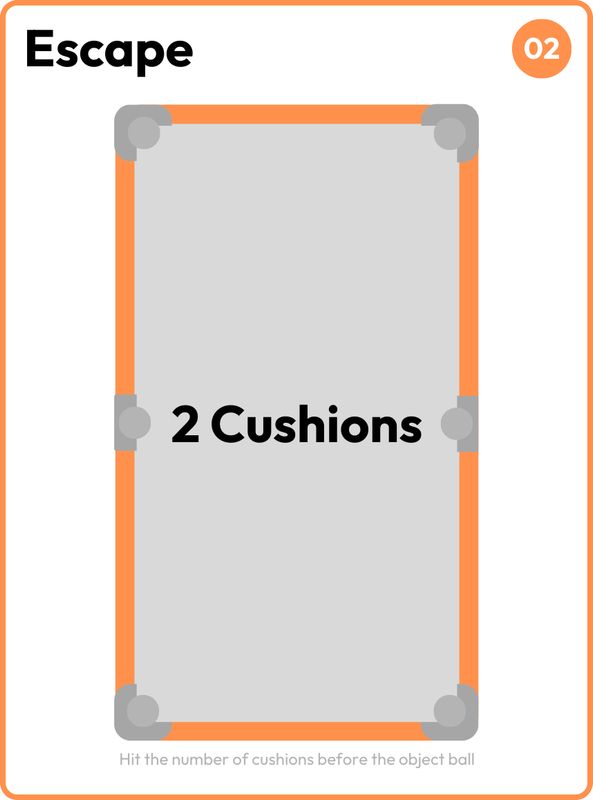
Escapes set a cushion count instead.
Why the app deals rather than lets you pick
Because choosing your own drills reliably produces a diet of things you are already good at. Everyone's instinct is to practise their favourite shot, and everyone's favourite shot is one they can already play.
Dealing removes that choice, which is the same principle behind random over blocked practice — the unpredictability is the active ingredient, not a side effect.
Common questions
- How many drill combinations are there?
- Well over a million once the decks are combined and filtered for compatibility, which is why the same drill rarely comes up twice.
- Can I practise just one deck?
- You can narrow which packs are in play, which is useful if you want to concentrate on safety or on a particular layout type. Narrowing too far, though, reintroduces exactly the blocked-practice problem the deck structure exists to avoid.
Stop choosing your own drills
CueCards deals you a randomised drill at your level, tracks whether you made it, and moves your skill rating accordingly. Free to start, no ads.
Deal a drill