How to escape a snooker: kick shots and the mirror system
Being snookered is the one situation where most players simply guess. They pick a cushion that looks about right, hit it, and hope.
There is a method, it takes about ten minutes to learn, and it is one of the few bits of pool geometry that gives you a genuinely repeatable answer.
How an Escape card works
The card names a number of cushions the cue ball must strike before it contacts an object ball. That is the whole condition, and it is exactly the requirement a real snooker imposes on you.
It also makes escapes practisable without needing to construct an actual snooker: you do not have to hide the white behind anything, you just have to obey the cushion count.
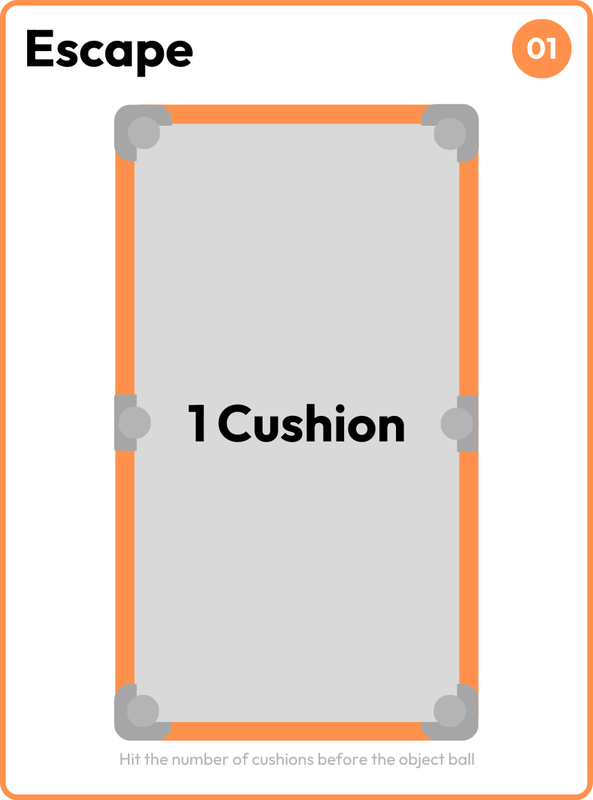
One cushion before contact — the simplest kick.
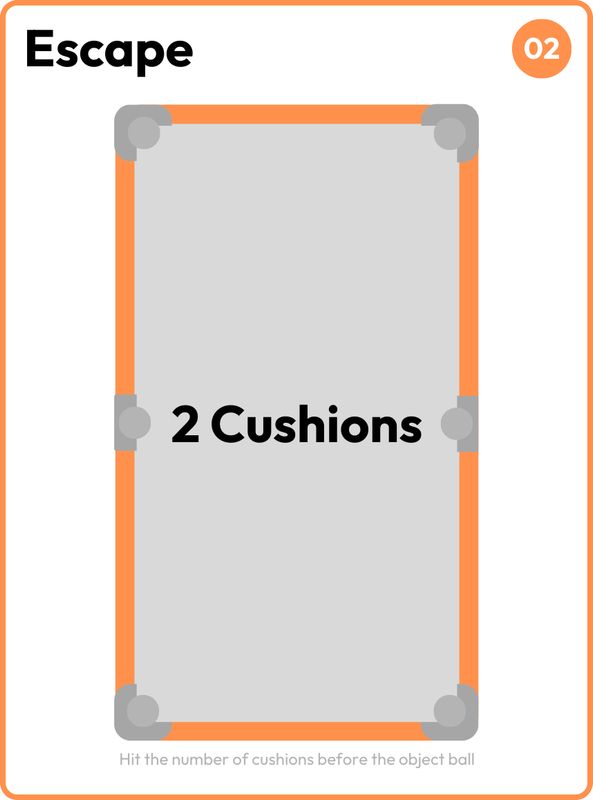
Two cushions — now you are planning a route.
The mirror system, which is the actual technique
A ball rebounds off a cushion at roughly the angle it arrived — angle in, angle out. That means you can find the aim point by mirroring the target across the cushion.
Picture the table reflected in the cushion you intend to use, as though the rail were a mirror and there were a second table beyond it. In that reflected table there is a reflected copy of the ball you need to hit. Aim the cue ball straight at that reflection. Where your aiming line crosses the real cushion is your contact point.
That is it. For a one-cushion escape it works directly. For two cushions you mirror twice — reflect the target across the second cushion, then reflect that result across the first.
The adjustments that matter
- Pace changes the angle. A hard shot rebounds shallower — it comes off the cushion at a flatter angle than a slow one. Choose your pace before you pick your contact point, not after.
- Side spin changes it more. Any unintended side will throw the rebound off noticeably. For escapes, centre-ball is almost always the right choice.
- Aim to hit the ball, not to be clever. In most rule sets a missed escape is a foul, and a foul that also leaves the table open is a disaster. Hitting the ball with no position is a good outcome.
Building up the cushion count
Every extra cushion multiplies your error rather than adding to it. A two-degree mistake at the first rail is four degrees after the second and eight after the third, which is why three-cushion escapes are so much harder than two.
Practise them anyway. Not because you will play them often, but because a player who can find a three-cushion line will find a one-cushion line without thinking about it.
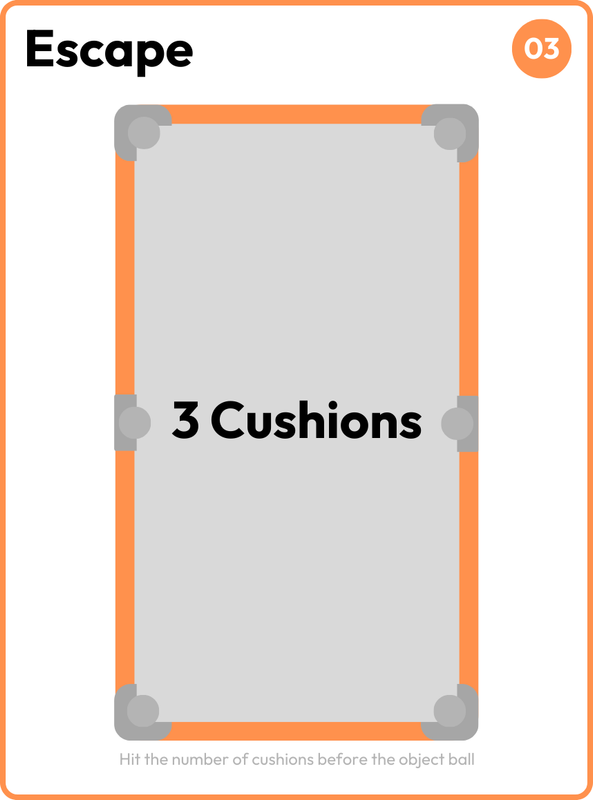
Three cushions — error compounds at every rail.
An escape session that works
Working the line out before you get down is the part that matters. Getting down first and adjusting while you are there is how guessing disguises itself as method.
- Put one object ball on the table and the cue ball anywhere.
- Deal or pick a cushion count.
- Work out the contact point with the mirror system before you get down on the shot.
- Play it. Pass if you strike the object ball having hit the required cushions first.
- Move both balls and repeat. Never play the same escape twice in a row.
Why this is worth practising at all
Escapes are the moment in a frame where the gap between players is widest. A good player finds the contact point and hits the ball; a weaker one gives away a foul and often the frame with it.
It is also the natural other half of safety practice — one skill puts your opponent in trouble, the other gets you out of it, and most players have practised neither.
Common questions
- What is a kick shot in pool?
- A shot where the cue ball strikes one or more cushions before contacting the object ball. It is the standard way out of a snooker, and the same shot is called a kick, an escape or a cushion-first shot depending on where you play.
- Does the mirror system actually work?
- Reliably for one cushion, well for two, roughly for three. It assumes a perfect angle-in-angle-out rebound, which real cushions only approximate — pace and spin both shift it — so treat it as the starting line and adjust from experience.
- Should I use side spin when escaping a snooker?
- Usually not. Side makes the rebound angle much harder to predict, and the priority in an escape is making contact at all. Save spin for when you need the cue ball to finish somewhere specific afterwards.
Stop choosing your own drills
CueCards deals you a randomised drill at your level, tracks whether you made it, and moves your skill rating accordingly. Free to start, no ads.
Deal a drill