Rule cards: practising with constraints
A Rule card adds one condition to the drill. That is all it does, and it is the deck that stops a layout ever becoming routine.
Constraints are also a genuine training method rather than a gimmick: restricting your options forces you to find shots you would otherwise never choose, which is how a repertoire gets wider.
What a Rule card looks like
Rule cards are text, not diagrams, because they apply to whatever layout you have been dealt. The same rule against an open four-ball spread and against a cluttered eight-ball table are very different problems.
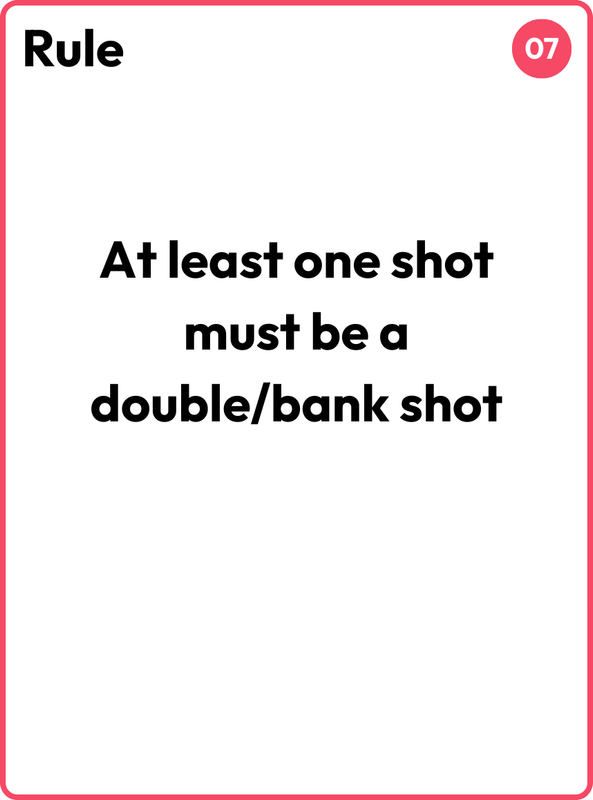
A technique rule — forces a shot you would avoid.
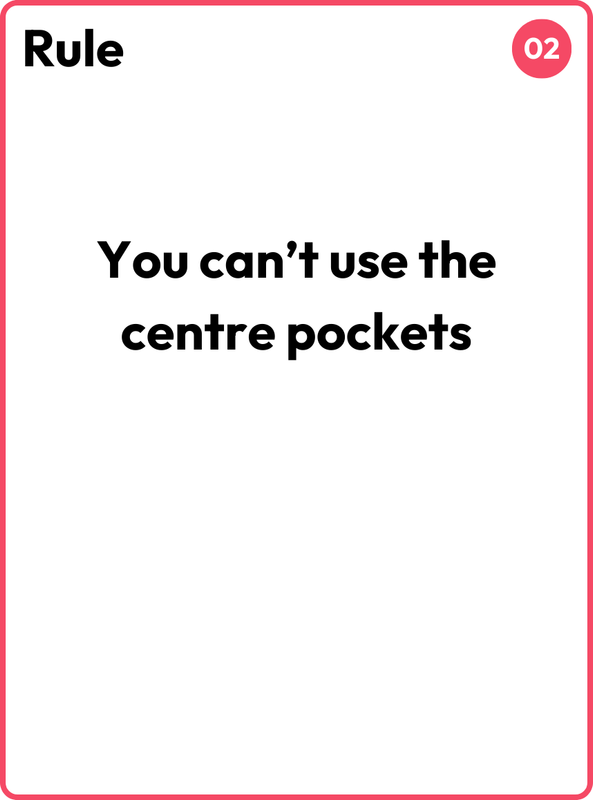
A restriction rule — removes easy options.
The three kinds of rule
- Restrictions take options away — centre pockets banned, no two consecutive pots in the same pocket. These force longer routes and better position.
- Technique requirements demand a specific shot — at least one double, a cushion contact after every pot. These build shots you would otherwise never practise.
- Process rules govern how you play rather than what you play — call every pocket, a shot clock. These train decision-making and commitment.
Why constraints work
Left to yourself you will play the shot you are best at. That is rational in a match and useless in practice, because it means your practice reinforces your existing strengths and leaves your weaknesses exactly where they were.
A constraint removes the comfortable option. If centre pockets are banned, the ball you would have rolled into the middle now has to go up the table, which requires position you have not been practising.
It is the same logic as varied practice: making the session harder in a specific, structured way is what makes it transfer.
Rules and difficulty
A rule can change a drill's difficulty enormously. A shot clock barely constrains anyone. “Cushion contact required after every pot” turns a routine clearance into a serious position exercise.
That is why rules are rated alongside layouts rather than treated as decoration — the combination is what determines the drill's rating, and therefore what it does to your skill rating.
Common questions
- Do I have to follow the rule card exactly?
- Yes, or the drill has not been passed. The constraint is the drill — without it you are just clearing a layout you have probably cleared before.
- Can I practise with constraints without the app?
- Easily. Write six restrictions on scraps of paper and draw one before each rack. The method matters more than the medium.
Stop choosing your own drills
CueCards deals you a randomised drill at your level, tracks whether you made it, and moves your skill rating accordingly. Free to start, no ads.
Deal a drill